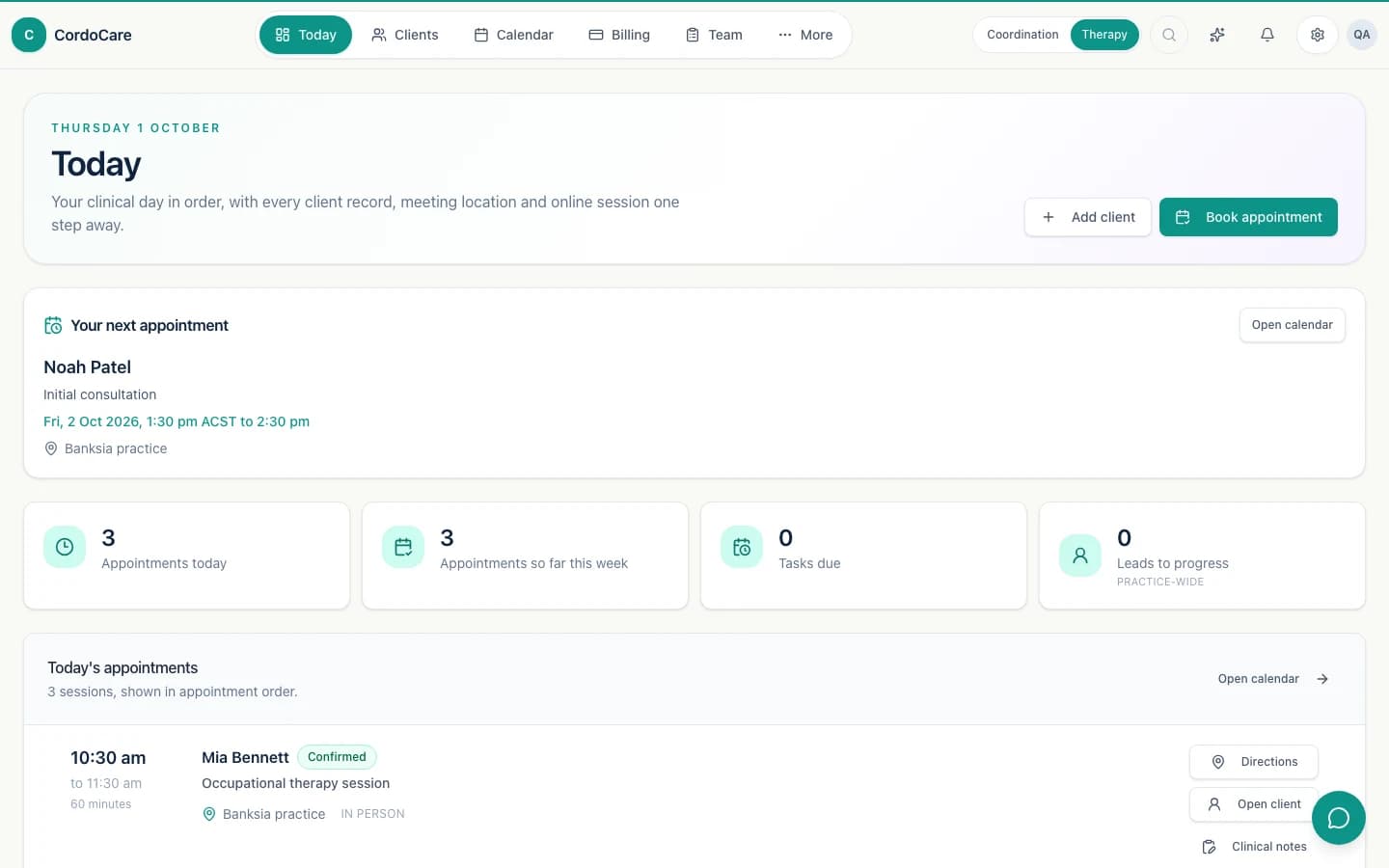
Your coordinator and therapist may work with the same person, but they don’t do the same job. Good software should help each team find what they need without treating every record as something everyone should see.
Share the basics where it makes sense
Contact details, the right person to call and an agreed appointment can be useful across a team. Keep those details up to date in the client record. Check consent and access before making clinical notes or other sensitive material available to another role.
Keep each workflow clear
Support coordination follows participant plans, connections with providers, case notes and follow-up. Allied health adds appointment preparation, clinical records and practitioner review. Give each team a workspace that fits its work, with a clear way to find authorised information from the other side.
In CordoCare, a practice that does both uses the Therapy & Allied Health plan and can move between the two workspaces. Check current pricing and trial terms before choosing your plan.
Try a handover before you move
Use a fictional client to walk through a referral or handover. Ask what the receiving practitioner needs to know, where that information lives and who has permission to share it. Test with the actual staff roles you intend to use, not only an administrator account.
Keep the billing story readable
Use the correct service, funding arrangement and payer for each piece of work. Having one client record shouldn’t blur who delivered the service or which agreement applies. Ask your finance team to review a sample invoice from each workflow.
Make room for participant choice
A shared software system doesn’t decide who someone should receive services from. Keep the participant’s preferences and your conflict-of-interest processes visible in the way your team works. Software can help you record decisions, but it doesn’t replace those conversations.
See both sides before choosing
Ask for a walkthrough covering both support coordination and allied health. Bring a typical handover and a billing example. We can show you where each part sits and discuss anything your team needs to check.